
3 Spring Science Experiments to Do at Home with Your Learner
Spring is in the air, and with it comes the perfect opportunity to bring a little extra curiosity and discovery to your school days. As the weather gets warmer and nature starts to wake up, it’s a great time to lean into hands-on science at home that feels more like play than school.
1. Coffee Filter Chromatography
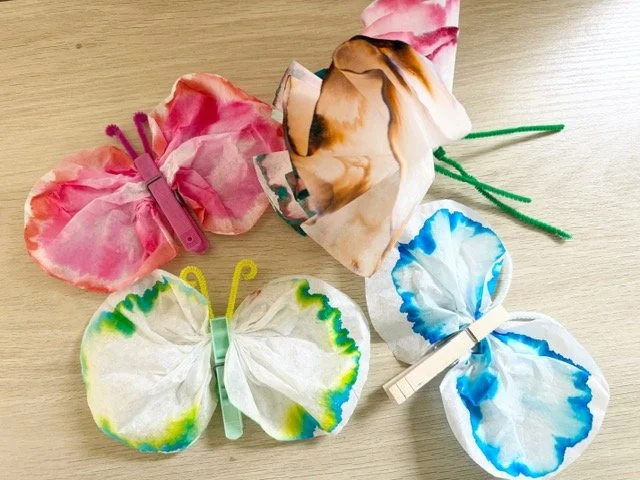
Chromatography is a simple and fascinating way to explore how different colors are made up of multiple pigments, making it a perfect spring science experiment for kids at home.
For this activity, all you need are coffee filters, washable markers, and a bit of water.
Using a variety of marker colors and brands, draw thick circles around the center of flattened filters, about an inch from the center, making sure the color is bold and clearly visible. Fold the filters in half once, then fold that half over again to form a loose cone with a pointed tip. Place the tip of the cone into a shallow cup of water, ensuring only the tip is submerged. Do not let the water touch the marker line. Let the filters sit in the water for 10 minutes or more until the colors begin to spread. As the water spreads, it separates the marker ink into different colors, creating beautiful, tie-dye-like patterns. Once the color has spread to the tops of the filters, pull them out and flatten them to dry.
Once the filters are dry, transform them into flowers or butterflies for a cheerful spring craft. To make a butterfly, pinch the center, then attach a clothespin or pipe cleaner to form the body. For a flower, gather the center of the coffee filter, pinch and twist it into shape, then add a pipe cleaner as the stem to complete the look.
You’ll end up with a colorful decoration that also doubles as a simple science lesson, perfect for combining homeschool science and art activities.
Go deeper: Have them use the accompanying worksheet for additional learning opportunities. Download it HERE.
What they’ll learn: color mixing, solubility, and how scientists separate substances into parts.
The first of our three featured projects, Coffee Filter Chromatography, was highlighted in our May email newsletter, where you’ll find a full downloadable PDF complete with photos and step-by-step instructions. If you missed it, you can download the PDF HERE. Want more hands-on activities like this? Be sure to subscribe to our newsletter to receive updates, event details, and a brand-new DIY science experiment delivered to your inbox each quarter.
Here are two additional projects designed to keep your eager learners engaged, learning, and enjoying a bit of springtime fun along the way.
2. Growing Beans in a Bag
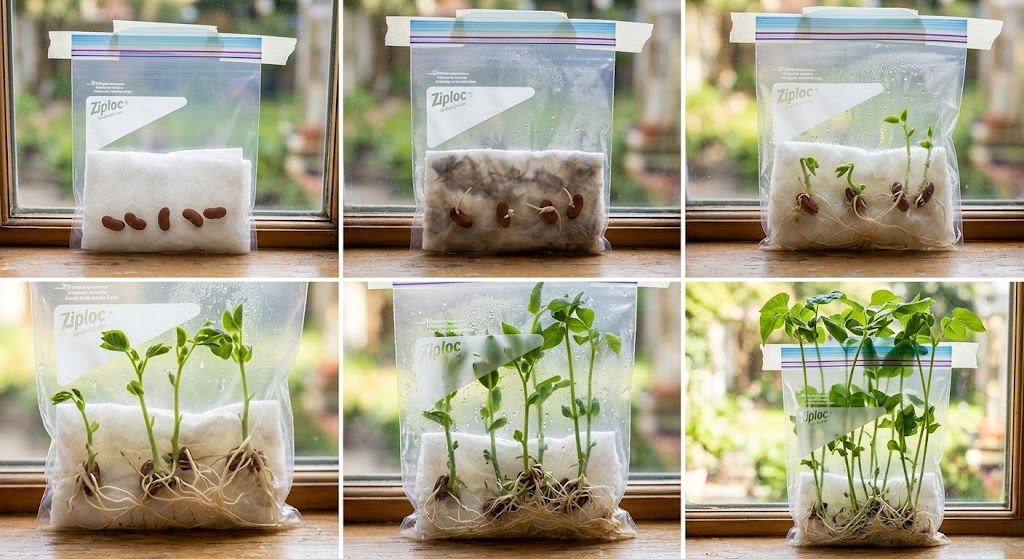
Spring is all about new life, making it the perfect time to explore how plants grow with an easy spring homeschool plant experiment.
Place a damp paper towel inside a clear zip-top bag, then tuck a few dry beans (like lima or pinto beans) between the towel and the plastic so they’re visible. Tape the bag to a sunny window and watch what happens over the next several days.
Your child will be able to see roots sprout, stems push upward, and leaves begin to form, an engaging way to do hands-on science at home without needing a garden.
Extend the learning: Have them draw what they see each day, label plant parts, or measure growth over time to incorporate simple math.
What they’ll learn: plant life cycles, germination, and the role of water and sunlight.
3. Rain Cloud in a Jar
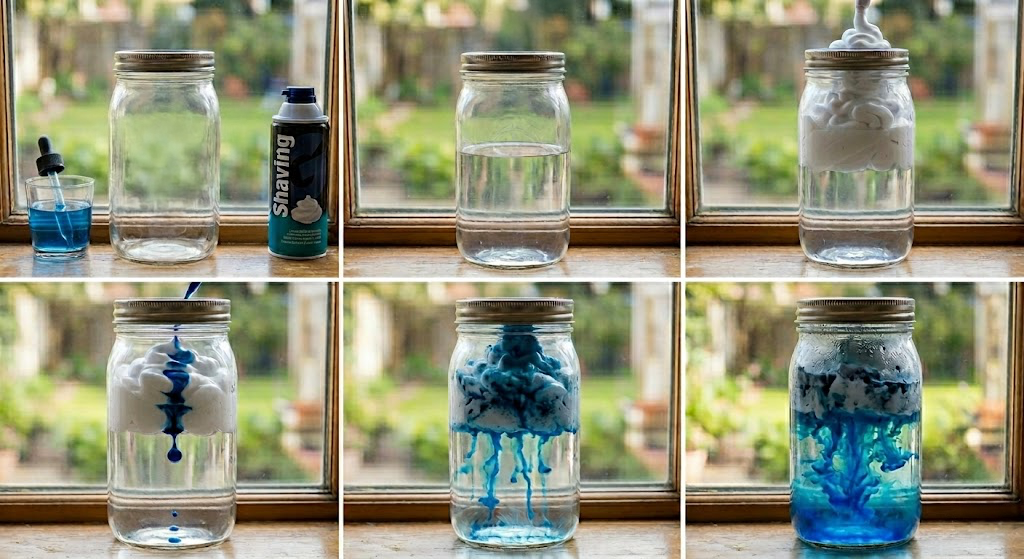
May showers are a perfect excuse to explore how rain forms with this fun and visual weather science experiment for kids.
Fill a clear jar about three-quarters full with water. Add a layer of shaving cream on top to represent a cloud. Then, using a dropper or a spoon, slowly drip colored water (food coloring mixed with water) onto the “cloud.”
As the cloud fills up, the colored water will begin to fall through into the jar, just like rain. This is a great addition to your spring homeschool science activities.
Try this: Use different colors and see how they mix as they fall.
What they’ll learn: how clouds hold water and what causes rain to fall.
Spring is full of opportunities to explore, create, and ask questions. These simple experiments don’t require fancy supplies, but they open the door to meaningful learning and memorable moments together. Whether you’re watching colors bloom across a coffee filter or roots stretch toward the sun, science has a way of making the season feel even more alive.